
Forestry Mulching in Middle Tennessee
One Machine. Clearing and Cleanup in a Single Pass.
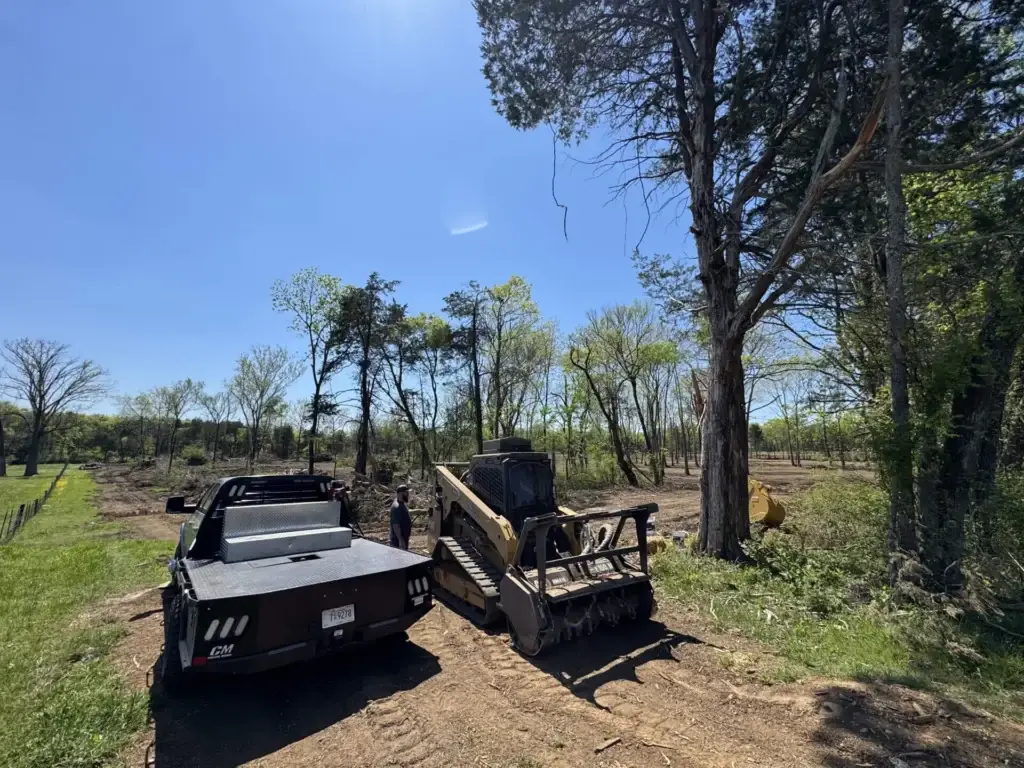
Forestry mulching uses a tracked machine with a rotating drum to grind standing brush, saplings, and small trees into mulch right where they stand. For property owners across Middle Tennessee, it is the fastest way to turn an overgrown lot, a choked fence line, or a pasture lost to cedar and briars back into usable ground.
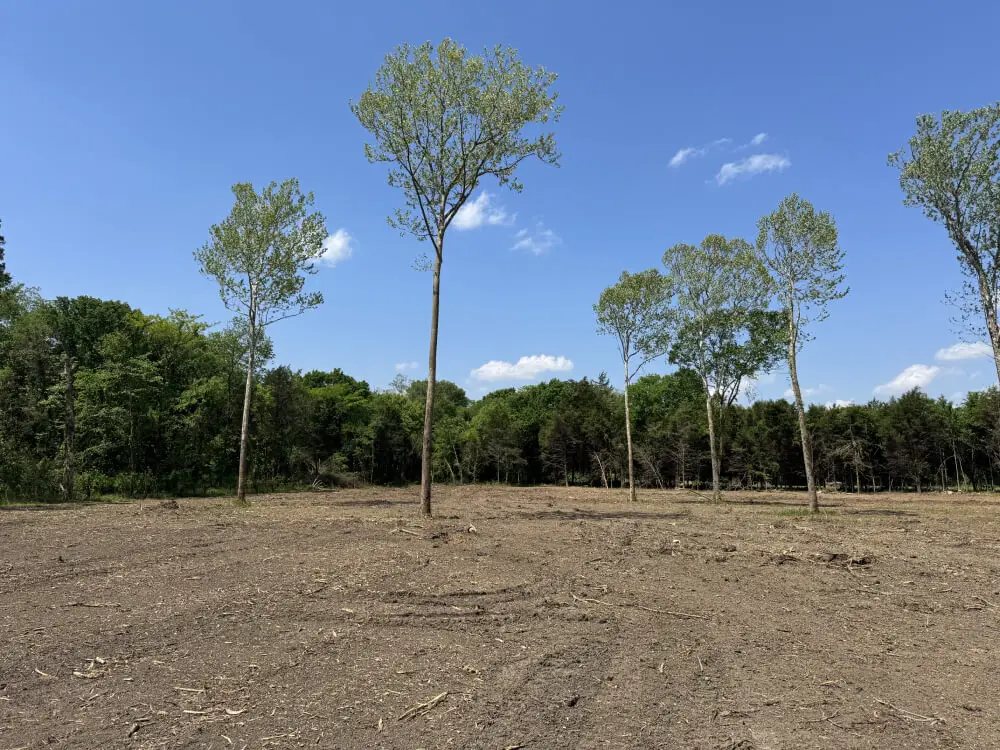
Because the material stays on site as a layer of mulch, there is nothing to pile, burn, or truck away. That layer protects the soil from erosion, holds moisture, and breaks down over time. You can also be selective: we work around the healthy hardwoods you want to keep and take out the undergrowth around them.
Clune Services runs mulching jobs out of Petersburg for homeowners, farms, and landowners from Lewisburg and Fayetteville to Columbia, Shelbyville, Tullahoma, and Franklin.
What We Mulch:
Overgrown Lots
Reclaim wooded or brushy lots for a homesite, yard, or a clear view of your property.
Fence Lines
Clear a clean path along an old or planned fence line so posts and wire can go in.
Pasture Reclamation
Knock back cedar, briars, and saplings that have crept into fields and pasture.
Trails & Access
Open up trails, hunting lanes, driveways, and access paths through the woods.
When Mulching Is the Right Call
Mulching is not the answer for every property, and we will tell you if it is not the best fit for yours. Here is how we decide.
Mulching works best for brush, saplings, small trees, and undergrowth, for properties where you want to keep the mature trees, and for ground that needs to stay covered and stable.
Traditional clearing is better when the site needs to be taken down to bare dirt for a building pad, a driveway, or a pond, or when there are large, mature trees that have to come out first. In that case we pull stumps, grade, and haul off with our land clearing and site work crews.
A lot of jobs use both: mulch the bulk of the property, then clear and grade just the footprint you plan to build on.
What Drives the Cost of a Mulching Job:
Every property is different, so we quote mulching after we walk the site with you. You get a clear price and a scope you can hold us to before any equipment shows up.
Density
Light brush mulches quickly. Thick cedar and heavy undergrowth take more machine time.
Tree Size
Saplings and small trees mulch easily. Larger trees take longer or may need removal first.
Acreage
Larger areas spread mobilization across more ground, so the cost per acre often comes down.
Terrain & Access
Steep slopes, rock, wet ground, and tight access all affect how fast the work goes.
Why Landowners Call Clune for Mulching
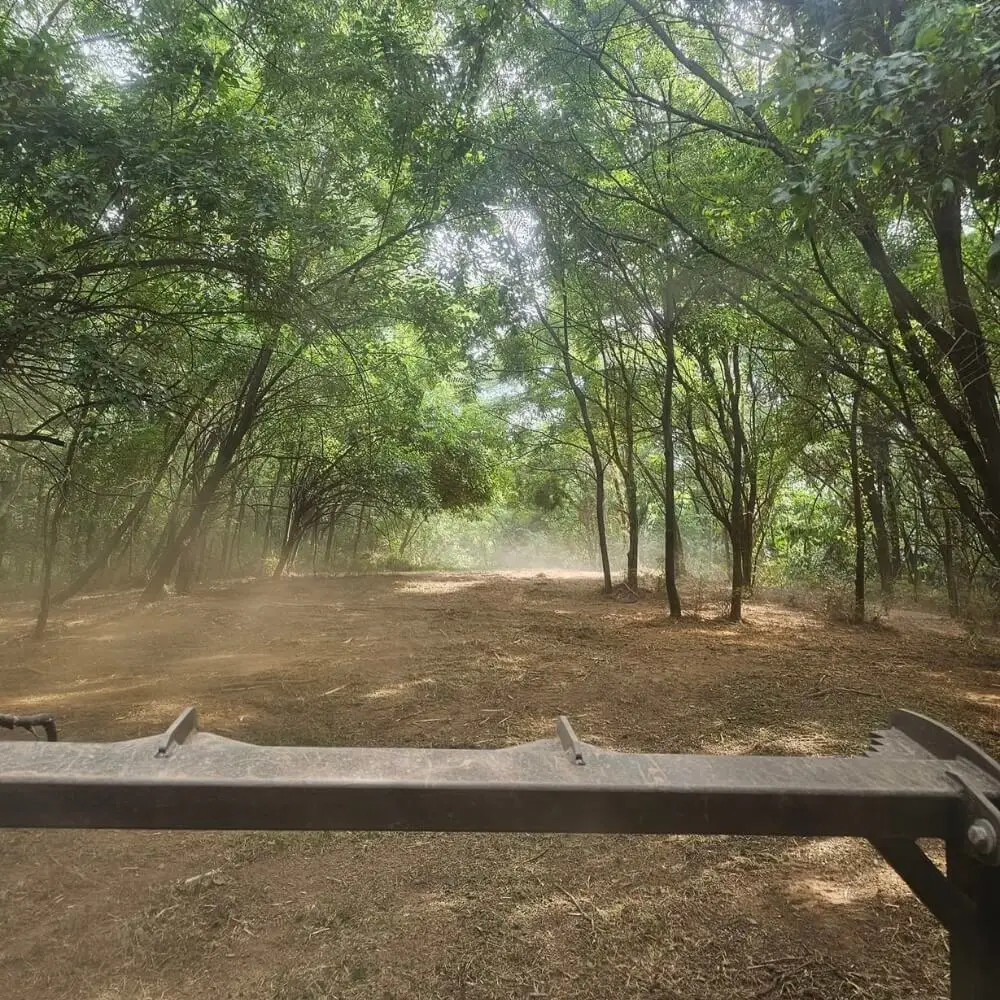
We are a local, family-owned team that has been clearing Middle Tennessee ground for over a decade. You talk to the people running the equipment, from the first walk-through to the final look at the finished job.
Because we also build fence and homes, a mulching job is often the first step of something bigger. Clear the line, then fence it. Clear the lot, then build on it. One crew, one schedule, one point of contact.
“We have 5 acres and needed a fence built on the property perimeter. Conner’s crew cleared an overgrown brushy area with tall trees and installed a custom four-rail fence with rounded posts.” Wendy S., Columbia, TN
Frequently Asked Questions
What size trees can a forestry mulcher handle?
Brush, saplings, and small to mid-size trees mulch well. Large, mature trees are usually cut and removed first, and we will point those out during the walk-through.
What happens to the mulch?
It stays on the ground as a natural layer that protects the soil from erosion and breaks down over time. There is no burn pile and no hauling.
Will mulching remove stumps?
Mulching grinds stumps down to about ground level but does not pull the roots. If you need bare ground to build on, we clear and grade that area separately.
Is fall or winter a good time to mulch?
Yes. With the leaves down we can see the ground and the trees worth saving, and the cooler months are a popular time to get land ready before spring projects.
How long does a mulching job take?
Most residential jobs take a day to a few days depending on acreage and density. We give you a timeline with your estimate.
Do you mulch outside Petersburg?
Yes. We work across Middle Tennessee, including Lewisburg, Fayetteville, Shelbyville, Columbia, Tullahoma, College Grove, and Franklin.
Ready to Reclaim Your Land?
Tell us about your property and what you want to do with it. We will walk the site, recommend mulching, clearing, or a mix, and give you a straight price. Serving Petersburg, Lewisburg, Fayetteville, Columbia, and the rest of Middle Tennessee.